
Services
Crowns
Our custom crowns cover and protect damaged or weakened teeth, helping Boynton Beach patients of all ages chew comfortably again.

Why choose us
Benefits of Crowns
Protects Weakened Teeth
A crown covers a cracked, worn, or heavily filled tooth to help shield it from further damage.
Restores Comfortable Chewing
We shape your crown to fit your bite so you can eat with more confidence.
Natural-Looking Results
Your crown is designed to blend in with the color and shape of your surrounding teeth.
Flexible Payment Options
We accept most dental insurance plans and offer financing, a membership plan, and cash-pay discounts.
Comfort-Focused Care
Ask us about nitrous oxide or oral sedation if dental visits make you anxious.
Biting down and feeling a sharp twinge, noticing a crack in a back tooth, or watching an old filling slowly give way can leave you wondering whether the tooth can be saved. In many cases, a dental crown is the way we protect what remains of a weakened tooth and help you chew, speak, and smile comfortably again. At Family Dentistry of Boynton Beach, we place crowns for patients across Boynton Beach, FL, and we take the time to explain why one may or may not be the right choice for you.
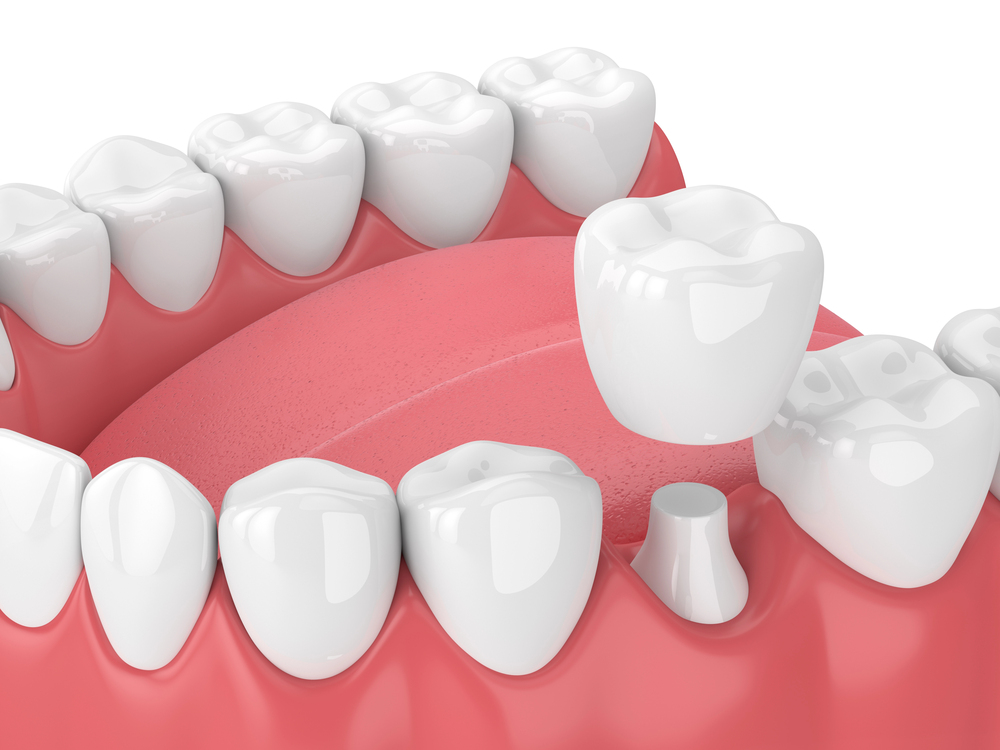
A dental crown is a custom-made cap that fits over the entire visible portion of a tooth, above the gumline. Instead of patching one small area the way a filling does, a crown surrounds the tooth and holds it together. That full coverage helps a damaged tooth handle everyday chewing and biting.
Crowns are a core part of the restorative dentistry we provide as a general dental practice that sees patients of all ages. Our dentists, Dr. Camilo Rodriguez, DMD, Dr. Ahron Ben-Jacob, DDS, and Dr. Laura Suris, recommend crowns when a tooth needs more support than a filling can offer but is still worth keeping.
Patients come to us for crowns for several different reasons. One of the most common is a large or failing filling. When a filling takes up much of a tooth, the natural walls around it can become thin and prone to fracture. A crown covers the whole tooth to reinforce it.
Another frequent reason is root canal therapy. We perform root canals on front teeth, premolars, and molars, and a treated tooth, especially a back tooth that takes heavy chewing forces, often benefits from a crown afterward. Crowns also play a role in tooth replacement. A crown can sit on top of a dental implant to replace a single missing tooth, and crowns on neighboring teeth can anchor a dental bridge. Some patients choose a crown for cosmetic reasons, such as covering a badly discolored or misshapen tooth as part of a broader smile makeover.
Am I a good candidate for a dental crown?
You may be a good candidate if you have a tooth that is cracked, heavily filled, worn down, or recently treated with a root canal. The only way to know for sure is a dental exam, where we look at the tooth closely and talk with you about your goals.
During your visit, we consider the health of the surrounding gums and the condition of the tooth's root. If gum disease is present, we may recommend treatment such as scaling and root planing first, since healthy gums give a crown a better foundation. If a tooth is too damaged to restore, we will talk honestly about alternatives, including extraction and replacement options like implants, bridges, or partial dentures. It helps to come prepared with a few things:
- Any sensitivity or pain you've noticed and when it happens
- Previous dental work on the tooth, if you know of it
- Questions about comfort options, appearance, or cost
- Your insurance information, if you have coverage
If dental visits make you anxious, please tell us. We offer nitrous oxide and oral sedation to help many patients feel more relaxed during treatment. We also offer Spanish and Creole-speaking appointments, so you can ask questions in the language you're most comfortable with.
How do I take care of a new crown?
A crown is cared for much like a natural tooth: brush twice a day, floss daily, and keep up with regular checkups. The crown itself cannot get a cavity, but the tooth underneath can still develop decay, especially along the edge where the crown meets the gumline.
That's why routine dental cleanings with our hygienist matter after you get a crown. These visits let us check the fit of your crown, clean areas that are hard to reach at home, and catch small problems early. It's also wise to avoid habits that put extra stress on teeth, such as chewing ice or using your teeth to open packages. If a crown ever feels loose, cracks, or comes off, call us. We offer emergency dental appointments, and our office is open seven days a week on a rotating schedule.
How can I pay for a dental crown?
We accept most dental insurance plans and are in-network with many popular plans. Restorative care like crowns is often partially covered, and we're glad to help you understand your benefits before treatment.
If you don't have insurance, you're welcome here as a self-pay patient. We offer cash-pay discounts, a dental membership plan, in-house financing plans, and new patient specials. We also work with HDF Financing, which approves up to 99% of patients, so you can spread the cost of care over time.
A weakened tooth rarely gets better on its own, and addressing it sooner often gives you more options. If you're dealing with a cracked tooth, a worn filling, or a tooth that needs protection after a root canal, we'd be glad to take a look. Call Family Dentistry of Boynton Beach to schedule a visit, and our team will help you decide on the next step for your smile.
The process
What to expect
- 1
Exam and Planning
One of our dentists examines your tooth and explains whether a crown is the right fit for you.
- 2
Preparing Your Crown
We gently prepare the tooth and fit your crown so it feels comfortable and matches your bite.
- 3
Ongoing Care
Regular cleanings and checkups with our hygienist help keep your crown and smile healthy.
Questions
Crowns FAQs
How much does a dental crown cost, and will my insurance help pay for it?
The cost of a crown depends on your tooth and the type of crown you need, so we give you a clear estimate after your exam. We accept most dental insurance plans and are happy to help you understand your coverage before treatment begins. If you're paying on your own, we welcome self-pay patients and offer HDF Financing, in-house financing plans, a dental membership plan, and cash-pay discounts to help make care more manageable.
Does getting a crown hurt?
Most patients feel little to no discomfort during crown treatment because we numb the area before we begin. If you feel anxious about dental visits, we offer nitrous oxide and oral sedation to help you feel more relaxed. Our team checks in with you throughout your visit so you always feel comfortable and informed.
How long does it take to get a dental crown?
Crown treatment usually takes more than one visit. Your dentist first prepares the tooth and places a temporary crown to protect it, then places your permanent crown at a later appointment. We'll walk you through your personal timeline during your consultation so you know what to expect.
Who needs a crown, and are there alternatives?
A crown may be a good fit if a tooth is cracked, badly decayed, worn down, or weakened after root canal therapy. Depending on the condition of your tooth, a filling may sometimes be enough, and if a tooth can't be saved, we also offer bridges and dental implants. Your dentist will examine your tooth and explain the options that make the most sense for you.
How long does a crown last, and what is recovery like?
With good care, a crown can last many years, though how long it lasts depends on your habits and overall oral health. Some patients notice mild tenderness or sensitivity for a short time after treatment, and most return to their normal routine right away. Brushing, flossing, and keeping up with regular exams and cleanings at our office help protect your crown and the teeth around it.